How Can I Use AI for Recipes Without Ruining Dinner?

Updated: Aug 15
I have to confess—I love trying new kitchen tools. Whether it is a vintage tart pan I picked up in a thrift store or a clever new gadget, I am always curious about anything that promises to make my cooking life easier or more inspiring. So, naturally, I decided to experiment with AI to see what all the fuss was about.

AI Doesn't Cook!
At first glance, it feels like magic. You can type in three ingredients sitting in your crisper drawer and get five brand-new dinner ideas in seconds! It is a brilliant way to break out of a recipe rut and think outside the box. Much better than sifting through bunches of different websites only to discover that those recipes included ingredients I didn’t have on hand.
However, do not take an AI-generated recipe at face value. As this article from NPR states, all that AI gives you isn't perfect. I love what Sarah and Kaitlin from the Woks of Life say about cooking in the article:
The stories that surround these recipes and the connections that we make with people through these recipes — it’s so deeply human
While AI can brainstorm like a dream, it lacks one vital kitchen tool: it doesn’t cook! And it doesn’t have a sense of taste!
AI generates solutions that are merely text-based on patterns, by analyzing words and what it finds in other recipes. While this can certainly be helpful, it doesn’t use reality. Plus, it might leave out crucial steps in the process that will make or break a dish. If you follow its literal instructions blindly, you might end up with an over-salted stew, soggy vegetables, or a complete dinner disaster.
A friend shared on our Facebook Group, that she recently bought a cookbook, that was most likely generated by AI because here were the ingredients for turkey meatballs:
Turkey that has been ground
Egg
Garlic and Spices
Combine the ingredients and shape into balls.
Bake for 20 minutes at 375°F.
That's it! No quantities of egg, garlic, and spices. Certainly cooking is an adpative art, but you have to give someone something to work with.
Compare that to my Meatballs for Dinner recipe.
I pound Ground Beef (or any ground meat you prefer)
2 cups Panko
1 egg
1 cup Parmesan Cheese
1 Tbsp Garlic Powder
Salt & Pepper
1 jar of your favorite Tomato Sauce
1 ball Mozzarella sliced if you can find it
Preheat the oven to 350°F.
In a bowl, mix together everything except tomato sauce and mozzarella. Don't over-mix. Just mix to combine.
Shape into whatever size meatballs you prefer. Cover them with the tomato sauce, then top each with a slice of mozzarella.
Bake for 20-30 minutes, depending on the size of your meatballs.
Serve as is, with a salad or a piece of garlic bread. Yum!
Plus I offer the differences between using different types of ground meat as a note.
Beef makes more firm meatballs
Pork makes slightly softer meatballs
Turkey makes soft meatballs
My AI Experiment: The Party Planning Test

I’d used it for small things in the past, such as recommending an ingredient substitute, finding a similar wine at Trader Joe’s for a wine that was suggested, or even converting measurements in a recipe. All worked really well, providing me exactly what I needed, so I thought I would put it to the test.
Recently, family members and I cooked for a gathering of 50-60 people. I decided to leverage AI to help with the organizing, scaling up the recipes, etc.
The initial menu concepts were deliciously creative, but when I looked at the actual step-by-step instructions, the cracks started to show:
It missed basic prep steps:
It instructed me to cook one dish in small batches, which wasn’t going to work for 50 servings. I had to go back in and ask the right questions to get a solution that would work.
It failed at linear math:
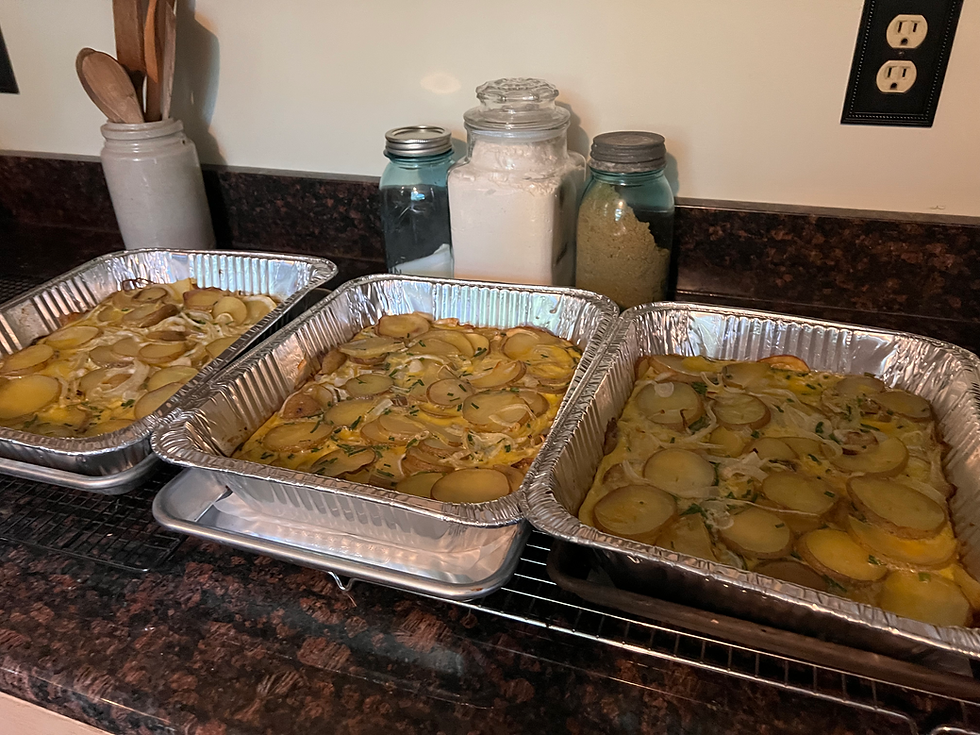
When I asked it to scale a recipe for a larger crowd, it simply multiplied every single ingredient by four—including the olive oil, salt, and spicy chili flakes. When I looked at the quantities, they didn’t make sense. For example, it recommended 2.5 cups of olive oil to prep some potatoes. When I dug in, I found it assumed I was going to deep fry them, when we had already put in place a process for roasting. The quantity went from 2.5 cups to ¼ cup. A huge difference.
It got confused when you asked too many questions:
I found it contradicted itself when we got in the weeds about something. It was better to reach out to another family member to get their perspective, and a solution was formed based on their knowledge rather than AI.
Timings weren’t accurate:
Most dishes took way longer to cook than the time listed in the recipe. This did throw planning off greatly, especially with dishes I hadn’t cooked before.
It generalizes ingredients:
For example, when it asked for Extra Virgin Olive Oil, there were actually two different grades needed. One for cooking and one for marinating. If you didn’t know the difference you may have spent a lot of extra money buying the higher-quality version for cooking, and you didn’t need to.
You had to ask if you wanted to be creative:
In many recipes, variations will be suggested, or substitutions offered. When it gave me a recipe for gazpacho, to me it seemed a bit bland. It wasn’t until I asked it if I could add a jalapeño and extra garlic that it came back with a “Those are great suggestions! You need punchy flavors when serving a chilled soup.” If I hadn’t asked, I would have had a sub-par dish. Instead, I created this recipe for gazpacho, tested it, and it was great.
I had to go back to the tool multiple times to clarify, adjust quantities, add missing prep steps, and correct the flavor balance. I essentially had to act as its executive chef. It really showed me that you have to know something about what you are doing when using AI so you can course-correct, not just in cooking, but in anything you use it for.
Secrets for Successfully Using AI in Your Kitchen
If you want to play with AI in your meal planning, it can be a great tool to get the creative juices flowing—provided you keep these practical solutions and fundamentals in mind.
Use AI for Inspiration, Not Execution
The Tip: Use AI to generate flavor combinations or pantry clean-out ideas, but write the final recipe instructions yourself using established techniques. This may mean that you need to do a bit more investigation of similar recipes, but believe me, it makes a huge difference.
Why this works: AI excels at cross-referencing thousands of ingredients instantly. That is its superpower. It can suggest new food pairings you haven’t thought of, which is great.
What to watch out for: However, it isn’t great at how those ingredients interact. AI does not understand that aromatics like garlic and ginger need to bloom in warm oil to release their fat-soluble flavor compounds.
Never Trust Automated Scaling or Seasoning or even Cook Times

The Tip: Treat AI ingredient amounts as a rough suggestion. Taste as you go or question AI when you think something doesn’t sound right. If you aren’t sure, check other recipes for what they recommend.
What to watch out for: Cooking is not purely linear. When you double or triple a recipe, ratios change. Evaporation happens at different rates, and spices do not scale in a simple 1:1 ratio. If you multiply the cayenne pepper in a recipe meant for two people to feed a crowd of twenty, you will overpower the entire dish!
The Solution: Keep your salt and heat at half of what the math suggests, then adjust to taste near the end of cooking. When in doubt, ask someone or check with an expert…oh, that is the next tip!
Do a "Human Sanity Check" with Real Experts
The Tip: Cross-reference any AI-generated idea with trusted culinary resources, proven cookbooks, or a culinary expert before you start chopping. Yes, I know that AI is supposed to help you become more productive in the kitchen, but blindly trusting what you are given could lead to a disaster.
Why this works: Cooking for a small household (or a group of close friends) should be an enjoyable, waste-free process. Trusted sources—like Appetite for Life, where I test every recipe, classic test kitchens, or experienced cooks in your own circle—test recipes in actual kitchens on real stoves. A human chef accounts for food safety, proper pan sizes, and realistic prep times that a computer algorithm simply guesses.
What to watch out for: Smaller cooking sites are using AI to generate recipes or just copy recipes from other sites, so they may not be steering you in the right direction. And even if they are human-based, they may have measured or written something incorrectly on the website. My recommendation is to find a couple of trusted sites you can go to as cross-references. Then if something feels a bit off, check some other sites. Honestly, I do this all the time even if I don’t use AI.
What I Learned Using AI for Recipes
I love using AI to get the ball rolling. I like to think of AI as an enthusiastic, slightly confused kitchen assistant (don’t you love that image). It can hand you the ingredients and toss out fun ideas, but you are the head chef in your kitchen.
Rely on your fundamentals, trust your palate, and remember that real culinary confidence comes from understanding why a recipe works—not just following words on a screen! And when in doubt check with others so that you can make the best dish possible.
Also, I encourage you to keep notes, a habit I started long ago. Write down or print your recipes and then note where you adjust it so you can recreate it in the future.
Curious about how to adapt your favorite large-batch meals for 1 or 2 people without relying on computer guesswork? Check out my latest recipes on Appetite for Life, where I’ve started to scale them back!
Frequently Asked Questions
Is AI accurate for scaling recipes up or down for different crowd sizes?
No. When scaling recipes, AI typically multiplies every ingredient at a simple 1:1 ratio, which can ruin flavor balances, overpower spice levels, and lead to massive liquid or oil errors. Always keep spices and salt at half of what automated math suggests, then adjust to taste near the end of cooking.
What is the best way to use AI in meal planning and cooking?
Use AI as an enthusiastic brainstorming assistant rather than your head chef. AI excels at cross-referencing ingredients instantly to give you pantry clean-out ideas or unique flavor pairings. However, you should always double-check final cooking instructions, prep steps, and cook times using your own culinary judgment or trusted recipe sources.
What are the main risks of following an AI-generated recipe blindly?
AI generates text based on language patterns. It doesn't cook, and it can't taste things. Following an AI recipe blindly can lead to missing crucial prep steps, inaccurate cook times, missing ingredient measurements, or unpalatable seasoning levels. In the NPR article referenced above, AI even suggested a toxic combination of ingredients.
Why is a "human sanity check" necessary for AI recipes?
Human chefs test recipes in real kitchens on real stoves, taking into account food safety, proper pan sizes, and realistic prep times. Cross-referencing AI-generated ideas with tested recipes or experienced cooks ensures your meal is safe, enjoyable, and waste-free.
Oh, and before I go
If you haven't yet subscribed: Here is the link to subscribe to my free newsletter where you get tips like this and some recipes for inspiration.
Three Minute Pantry Meals
These recipes are some of my go-to, last-minute meals I make right from my pantry. In just a couple of minutes, you too can have dinner on the table. Click on the button to download your copy now.

About Jen Vondenbrink
Jen Vondenbrink is the creator of Appetite for Life and an expert in small-scale cooking. Her culinary background includes restaurant and catering work, a Massachusetts bakery apprenticeship, and professional training in the French Alps and London.
Jen develops intentional, smaller-scale recipes to make cooking for one or two smart and practical. Every recipe is kitchen-tested so you can cook with total confidence.


Comments