How to Make Authentic German Sauerkraut

Updated: Jun 10
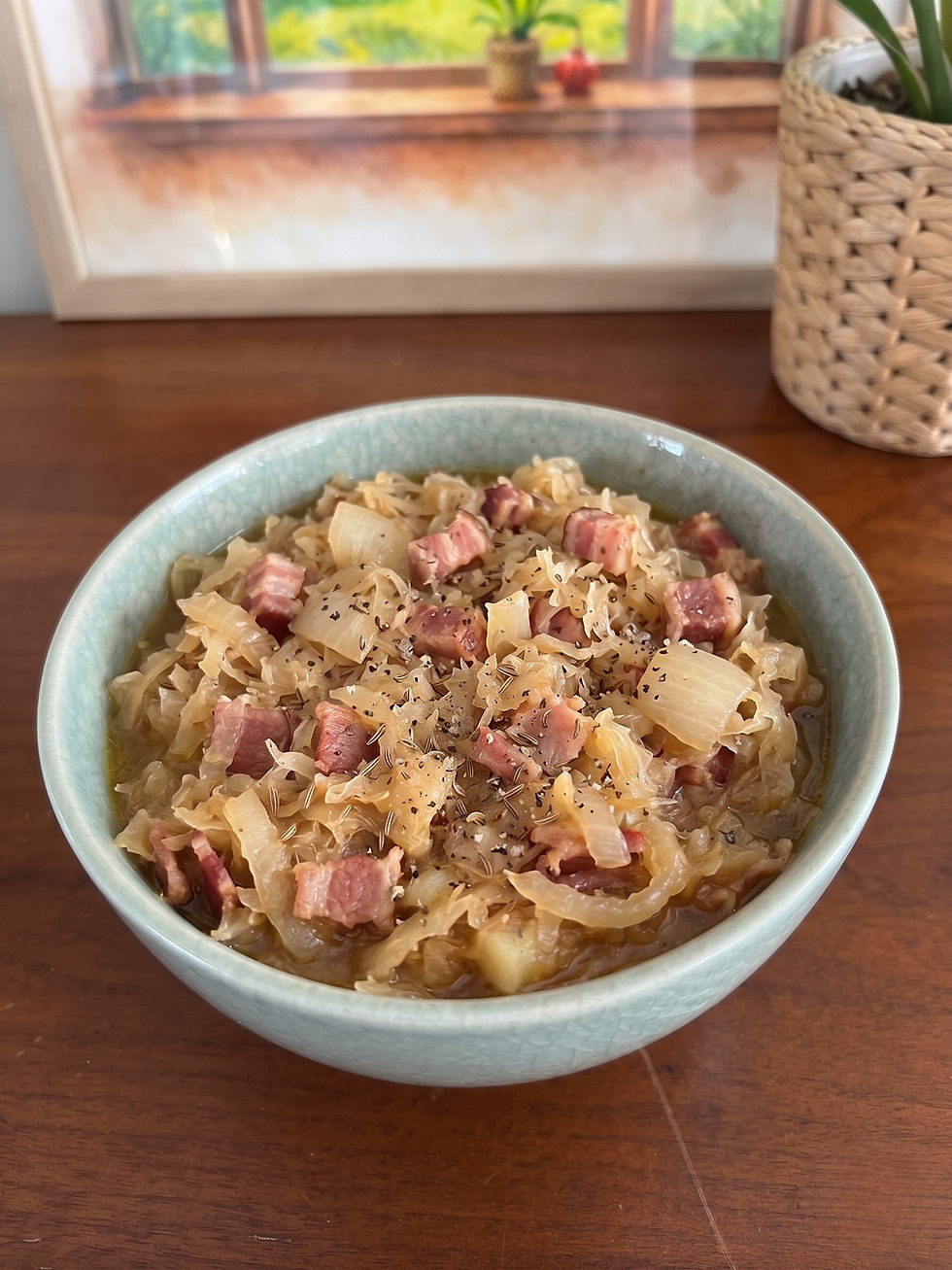
Why You’ll Love This Authentic German Sauerkraut
The Secret Starch Balance: This recipe uses a traditional German kitchen secret—simmering a whole starchy potato directly in the pot—to naturally absorb harsh acidity and create a beautifully mellowed, velvety finish.
Smart and Budget-Friendly: This recipe uses affordable packaged sauerkraut with basic pantry staples. This makes it easy to make anytime of the year.
The Smart Bacon Hack: Rendering the chopped bacon with a splash of water first accelerates the fat-release process and prevents the meat from scorching, giving you perfectly crispy bacon and an immaculate fat base for the onions.
Affiliate Disclaimer: If you click on one and make a purchase, I may receive a small commission at no extra cost to you. This helps me keep the site ad-free, helping you focus on the content you came for!
What you need to make this AMAZING Sauerkraut
Ingredients (Shopping List)
Bacon
Water
Large onion
Pre-made sauerkraut (packaged preferred)
Chicken stock
Bay leaves
Large starchy potato
Caraway seeds
Ground black pepper
Here's the Recipe!
A Taste of Germany from a Cozy Kitchen
Ok…I’m going to admit it. I’m not a fan of sauerkraut. Actually, I’m not a fan of very acidic dishes in general.
So coming from a German background on both sides of my family, there were always the dinners I dreaded - Sauerbraten and Sauerkraut and Pork Chops in particular,
That mindset shifted completely during my travels to Germany to spend time with family. My nephew, Jeff, is an incredibly talented cook who loves to experiment with flavor combinations. Because he lives right there in Germany and regularly serves his sauerkraut to local friends and family, I knew he was the absolute best source for an authentic, uncomplicated recipe.
So I reached out to him. Over WhatsApp, we discussed his recipe and why he does what he does, and he confirmed that it is a really simple, but tasty way to cook authentic German sauerkraut, starting with pre-made and packaged sauerkraut.

His secret…a starchy potato. By placing a whole, peeled potato into the braising liquid, the vegetable slowly releases its starches as it simmers. This starch acts as a natural buffer, binding to the sharp acetic acid of the fermented cabbage. It mellows out the aggressive bite without stripping away the signature tang, while simultaneously giving the broth a gorgeous, full-bodied texture even after you take it out.
Historically, regional German cooks have always used clever tricks to balance sauerkraut—often incorporating grated apples or a touch of sugar. Jeff’s whole-potato method works perfectly for me. I still can’t say I love sauerkraut, but when I make it, this is the way I do it, and it always comes out great.
And, here’s where I go off script, this is an equally delicious way just to make cabbage!
Variations
The Autumn Apple Twist: If you want a traditional sweet-and-savory flavor profile, swap out the whole starchy potato for a peeled, finely grated tart apple (like a Granny Smith) stirred directly into the cabbage.
The Vegetarian Upgrade: For a meatless version, omit the bacon entirely. Sauté your onions in a generous melt of high-quality butter or olive oil, switch out the chicken stock for a robust vegetable stock, and toss in a small pinch of smoked paprika to replicate that classic smoky depth.
The Vineyard Braise: Pour a half-cup of dry German white wine, such as a Riesling or Pinot Gris, into the Dutch oven right alongside your chicken stock. The wine adds a bright, sophisticated layer of complexity that cuts through the richness of the bacon fat.
Frequently Asked Questions (FAQs)
Can I freeze this sauerkraut?
I highly discourage freezing this dish. The cabbage structure and the potato starch can break down during the thawing process, making the final result quite mushy while altering the delicate flavor profile. Preparing exactly what I need for a small meal is truly the best approach.
Should I use chicken broth or chicken stock?
I strongly recommend using a high-quality chicken stock for this recipe. If you want to know more about how these liquids behave in a braise, take a look at my article on Broth vs. Stock. Stock is simmered with bones, which releases gelatin and provides a rich body that coats the sauerkraut beautifully, whereas broth tends to be thinner.
What should I do if my sauerkraut looks too watery?
If the mixture looks a bit too soupy toward the end of your cooking time, simply take the lid off your Dutch oven. Let it simmer uncovered for the last 10 to 15 minutes, allowing the excess liquid to evaporate and reduce until it reaches your exact preference.
I’d Love to Hear From You!
Leave a comment down below and tell me how your kitchen smells right now—did you serve your authentic sauerkraut with classic pork chops, or did you try one of my creative variations?
About Jen
Jen Vondenbrink is the creator of Appetite for Life and an expert in small-scale cooking. Her culinary background includes restaurant and catering work, a Massachusetts bakery apprenticeship, and professional training in the French Alps and London.
Jen develops intentional, smaller-scale recipes to make cooking for one or two smart and practical. Every recipe is kitchen-tested so you can cook with total confidence.


Great addition to a meal. Thank you!